Soapnut Recipes Here are some ideas for you to try with your soapnuts. |
||
 Laundry
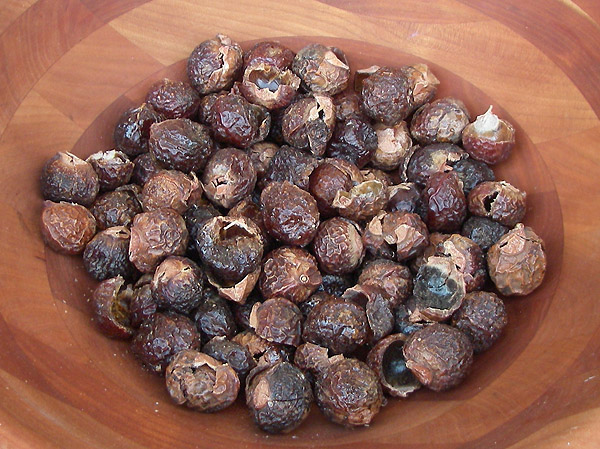
Place 3-4 whole cracked shells (or
equivalent in pieces) into a cotton bag or odd cotton sock, tie up or
knot the top and place into the tub with your laundry. You can use the
soapnut liquid if you prefer; see below. Remove the nuts after the cycle has finished and let dry (if there's time!) before your next load. The number of nuts you use depends on the size of your load and how dirty the items are, as well as the hardness of your water and efficiency of your machine. For example, use four nuts for a large, dirty load, in an old washing machine using hard town water, and two to three nuts for a small or normal load in a modern machine using rainwater. The temperature of the water is also a factor, as hot water will make the nuts release their surfactants quicker so you'll have to replace the nuts more frequently but the cleaning power will be stronger.
Washing your laundry in cold water is
perfectly fine depending on how dirty your laundry load is. We recommend
experimenting to find the best quantity required for your personal need
s. One lot of soapnuts can be reused until they lose their sticky, soapy feel and look pale and squishy on the inside, and are brittle when dry (4-6 times). When they are spent, throw them in the garden or compost.
You can also use them for hand washing by putting them into your laundry tub
and running water over them, then adding your clothes for a soak and
hand wash. This method is perfect for very delicate garments and materials, as well as fleeces. Soapnuts can be safely used for children's clothing, nappies and bedding, as well as for washing their stuffed animal toys. The soapnuts will not leave a residue and will kill bacteria, microbes and dust mites.
The same can be said for pet bedding and blankets, leaving it residue free, clean and smelling fresh.
Whole Soapnuts Whole soapnuts can be used for much more than just laundry! Here are some uses for whole soapnuts:
Liquid Concentrate
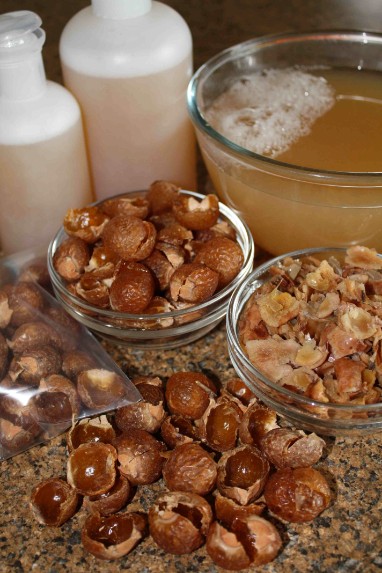
Place 100g of soapnuts with 3 litres of
water in a large saucepan or stock pot (this will make 2 litres of
liquid - you can make smaller amounts by using 2 cups of water and 4-6
nuts).
Bring to the boil, reduce heat and simmer for an hour or so. Strain the liquid through cloth and compost the nuts.
The concentrate will have a watery
consistency and small dense suds. It does not contain foaming agents and
thickeners like chemical detergents do, but it still has the cleaning
power! To thicken the concentrate, add a little cornflour (try 1teaspoon
in 1 tablespoon boiling water, then add to liquid concentrate) or
glycerin. This will create a more suitable consistency for use in a pump
pack. Leave the liquid thin for use in our foaming bottles (no
additives required). For best foamy results, let the concentrate sit
overnight and just use the clear liquid in the foamer bottles. The
sediment at the bottom can be used for all other bottles, but the
foamers have a very fine mesh filter which will become clogged. The concentrate can be used as is or diluted for all your cleaning requirements, such as:
And here are some more amazing ideas from Dorothy, our soapnut specialist in Nth QLD:
Refill your shampoo and detergent bottles to save on packaging and the environment. A note about the shampoo - there will not be suds. Oils make the bubbles disappear, but rest assured, the soapnut liquid is removing the excess oils from you hair (which is the aim of the game). Use enough so that your hair feels all silky when you rinse it. It may take a couple washes to get all the chemical residue out initially, from your old shampoo.
Preservation Soapnut liquid concentrate (or soapnut 'juice', if you like) has approximately a 2 week shelf life on the kitchen bench, or at least a month in the refrigerator. The addition of an antibacterial oil, such as eucalyptus oil, will extend the shelf life further still. We have also had great success with citric acid (available easily from supermarkets, or at our Online Store), just use 1 teaspoon per litre. Dissolve the citric acid crystals into 2 tablespoons of hot water, then stir into the strained soapnut liquid. The liquid can also be frozen for long term storage. We like to make it as we need it, each month, and store it in a jug in the refrigerator. We fill our spray bottles and foamy bottles as we need to, and the last bit left over each month is used in our washing machine. Because this is a totally natural product, the 'juice' will eventually ferment, turning into 'soapnut wine' (though we do not recommend drinking it!).
Essential Oils Essential oils can be added to give your homemade cleaner a pleasant scent, additional antibacterial qualities and for therapeutic benefits.
Soapnut liquid concentrate is the
perfect carrier for any essential or fragrant oil you desire. The oils
may rise to the top of the liquid, so shake before use. Please note that oils can have strong effects on the body and well being and adequate research is required into which oils are right for you. Some oils are irritating to the skin and unsuitable for sensitive skin and skin conditions. We will have safe suggestions here soon. In the meantime, have a look online as there are plenty of wonderful Australian essential oil websites. Our favourite oils are Eucalyptus, Lavender and Orange. They leave laundry smelling wonderful. Try Rose, Sandalwood, Vanilla or Musk as a real treat!
|
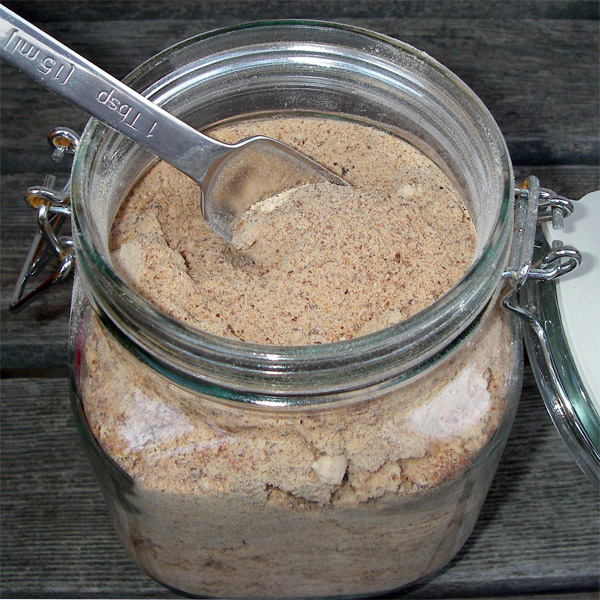
Traditionally, homemade laundry detergent involves at least two steps: I’ve experimented using soap nuts in many forms and concluded that the simplest method is to grind it up in a high-power blender like the Vita-mix (use the dry blade container).
|
|